When you sell acreage, square footage alone will not win over serious buyers. In Sagebrush Estates, buyers usually want clear answers about access, utilities, water, septic, flood risk, and future use before they even think about making an offer. If you want your property to stand out, your marketing has to reduce uncertainty and present the facts in a way that feels organized and credible. Let’s dive in.
Why acreage needs a different strategy
Acreage buyers tend to look deeper than typical homebuyers. They are often evaluating how the land functions day to day, what it allows in the future, and what hidden costs may come with ownership.
That matters in Sagebrush Estates because public listings show the area is marketed as a rural acreage product just south of Garden City in Finney County, not a standard city-lot subdivision. Recent examples include a 3.81-acre vacant parcel listed at $90,000 and a 3.5-acre improved property with utility and HOA details, which shows how much parcel-specific information can affect buyer interest and value framing. Recent public listings help illustrate that difference.
Start with verified property facts
Before you market acreage in Sagebrush Estates, verify the location and parcel data. The supplied ZIP code in this topic does not line up with the publicly verified Sagebrush Estates market area, which is tied to Garden City and Finney County rather than Brown County. That makes parcel verification a critical first step, not a formality.
For sellers, the best local tools are Finney County GIS and county appraiser records. These resources help confirm boundaries, acreage, tax data, map layers, and valuation context, and the appraiser notes that all real property is reinspected every six years.
Show access clearly
One of the first things serious buyers want to know is how they actually get to the property. Local country-living guidance highlights roads, entrances, emergency access, and year-round driveability as major considerations for rural properties.
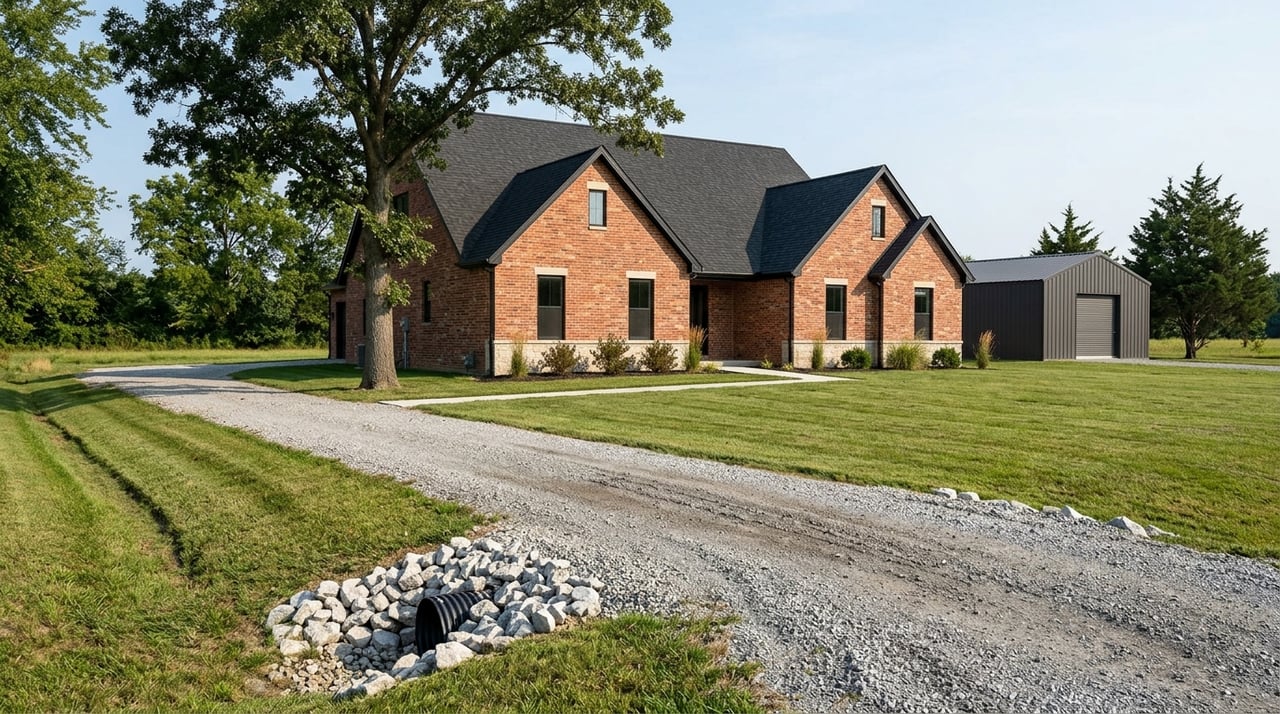
Your marketing should clearly explain whether access is paved or gravel, whether the drive is private or shared, and whether any easements or maintenance obligations affect the approach. The local country living guidance also notes that unpaved roads can be harder to maintain and clear during rain or snow, which makes these details even more important.
If a buyer is thinking about improvements, excavation, or adding utility lines, practical guidance matters too. Kansas One Call is part of the local due-diligence conversation because buyers should call 811 before digging, as noted in the same county guidance.
Be exact about utilities
Acreage buyers do not want vague descriptions like "utilities available." They want parcel-level detail.
That is especially true in Sagebrush Estates, where public listing information shows utility setups can vary within the same subdivision. One lot was marketed with power and gas on site but required a private well and septic system, while another improved property showed natural gas, a shared well, septic, and an annual HOA fee. The takeaway is simple: buyers need exact facts for your specific parcel, not assumptions based on nearby properties.
It also helps to explain the broader utility context. Garden City Public Utilities provides municipally owned power, water, wastewater, and solid waste services inside the city, but rural acreage parcels may rely on private wells, septic systems, or shared arrangements instead.
Answer water and septic questions early
Water and wastewater details can make or break buyer confidence. If your property has a shared well, private well, septic system, or open site for future installation, say so clearly and early.
This is not just about convenience. It is also about feasibility and compliance. The Kansas Department of Health and Environment local environmental protection guidance explains that onsite wastewater systems in Kansas must meet specific siting and separation standards, and those standards can directly affect what a buyer can do with the land.
For vacant acreage, that means buyers will want to know whether there is enough room for a compliant septic location and future replacement area. If you can organize those facts up front, you remove one of the biggest friction points in the acreage sales process.
Verify zoning and future use
If a buyer wants to add a shop, outbuilding, or other improvement, they will likely ask what is allowed before they ask about finishes or views. Your marketing should help them understand where to verify zoning, planning, and future-use requirements.
That matters because Garden City zoning regulations are amended continuously, and the city warns that linked PDF materials may not always be current. The city also points users to Planning and Zoning resources, including GIS-based map access, which is a better path than relying on third-party listing sites that may show conflicting zoning labels.
If future improvements are part of the likely buyer conversation, include that context in your marketing packet. Garden City site plan review information explains that certain projects require review before work begins.
Disclose covenants and HOA details
Serious acreage buyers usually do not want surprises after they are under contract. If your parcel is subject to HOA dues, covenants, subdivision rules, easements, or use restrictions, disclose that information early.
Public listing examples already show that HOA details may apply within Sagebrush Estates. One improved property was marketed with an annual HOA fee, which is a reminder that subdivision-level rules can influence how a buyer evaluates the land and its long-term fit.
The same local country-living resource also points to related due-diligence issues like easements, mineral rights, drainage, nearby agriculture, and flood risk. These are not minor details for acreage buyers. They are central to decision-making.
Use maps and aerials to build trust
For acreage, photos alone are rarely enough. Buyers need to see the parcel in context.
A stronger marketing package should include aerial photography, parcel maps, and labeled imagery that show the driveway, building area, nearby roads, and how the land lays out. Since Finney County GIS already provides public property mapping and information tools, those resources should help shape the buyer-facing presentation.
This approach does more than make the listing look polished. It gives buyers a practical way to understand boundaries, access, and usable land before scheduling a showing, which saves time for everyone involved.
Address floodplain and drainage up front
If a parcel is in or near a floodplain, do not wait for buyers to discover that on their own. Early disclosure helps you attract better-aligned inquiries and avoid wasted conversations.
Garden City floodplain map resources provide important local context for properties in Garden City and Finney County. If floodplain or drainage affects the property, include that information in the marketing file along with any other relevant parcel-level materials.
Market the lifestyle with proof
The strongest Sagebrush Estates marketing angle is not just land. It is land with practical access to Garden City.
That combination can appeal to buyers who want space without feeling disconnected from services and daily routines. Garden City Public Schools USD 457 notes that the district serves 7,100 students across 18 attendance centers and 928 square miles, while the city highlights the scope of its public utility services. Keep these references factual and location-based rather than promotional.
Connectivity can also matter. Pioneer Communications announced that Sagebrush Estates was included in a grant effort to bring fiber to rural Garden City communities, which makes internet access a meaningful feature to verify and highlight when available.
If the property has established trees or shelterbelts, that can be practical value too. K-State forestry guidance explains that windbreaks help reduce wind speed and provide important woody cover, which is especially relevant in western Kansas.
Price with evidence, not hype
Acreage buyers are often careful and data-minded. They respond better to specifics than to broad promises.
That makes pricing strategy especially important. According to the Finney County 2025 market study, residential values continued to rise in 2024, while vacant land remained relatively stable and some developing areas may follow residential trends. For Sagebrush Estates sellers, that means the best value story usually comes from your parcel’s actual access, utility setup, improvements, and use potential.
What serious buyers want answered
If you want to attract stronger inquiries, your marketing should answer the questions buyers are already asking.
A solid acreage listing should cover:
- Whether access is legal, recorded, and usable year-round
- Whether roads and drives are paved, gravel, shared, or private
- Whether water is city, shared, or private well
- Whether septic is installed or whether the site supports a compliant future system
- Whether HOA dues, covenants, or subdivision rules apply
- Whether easements, drainage issues, or mineral rights affect use
- Whether any portion of the property is in or near a floodplain
- Whether future improvements may require planning or site plan review
- Whether broadband or fiber availability can be confirmed
When you answer these questions before a buyer has to ask, your property feels better prepared, better represented, and more credible in the market.
A smarter way to market Sagebrush acreage
Marketing acreage in Sagebrush Estates is really about presenting certainty. The more clearly you document access, utilities, land use, and property-specific facts, the easier it is for serious buyers to say yes to the next step.
That is where a full-service, data-driven approach matters. If you are preparing to sell acreage near Garden City and want a strategy built on research, clear presentation, and local market knowledge, connect with RE/MAX ONE to start the conversation.
FAQs
What should a Sagebrush Estates acreage listing include?
- A strong Sagebrush Estates listing should include verified parcel boundaries, access details, utility setup, water and septic information, maps, aerial imagery, HOA or covenant documents, and any floodplain or zoning context tied to the specific property.
Why do serious buyers ask so many questions about rural access?
- Serious rural buyers want to know if access is legal, recorded, and usable year-round because road type, maintenance, and easements can affect convenience, cost, and future use.
How important are utility details for Sagebrush Estates land?
- Utility details are critical because public listings show that parcels in Sagebrush Estates can differ on power, gas, wells, septic, and shared services, so buyers need exact parcel-level information.
Where can you verify parcel information in Finney County?
- You can verify parcel boundaries, mapping, and some public property information through Finney County GIS, which is a key tool for acreage due diligence and marketing preparation.
Should floodplain information be part of acreage marketing near Garden City?
- Yes, if a parcel is in or near a floodplain, that information should be shared early so buyers can evaluate risk, planning, and property use with better clarity.
How should Sagebrush Estates sellers talk about value?
- Sellers should focus on documented value drivers like access, utilities, improvements, maps, and future-use potential rather than relying on acreage size alone.