Ready to scale your rental portfolio without taking on a large apartment building? Small multifamily in Garden City gives you steady demand, manageable price points, and simple operations. Whether you plan to house-hack a duplex or buy a fourplex for income, you want clear numbers on rents, taxes, returns, and the rules that apply in Kansas. This guide gives you local facts, example underwriting, financing options, and a due-diligence checklist so you can move with confidence. Let’s dive in.
Why Garden City works for small multifamily
Garden City has about 28,000 residents, a stable base for ongoing rental demand. You can confirm population, renter share, and median gross rent in the U.S. Census QuickFacts for Garden City. You want hard data when you invest, and that page is a reliable place to start your market view. Check the Census QuickFacts for Garden City.
Local employment is anchored by meatpacking and food-processing plants, which support a large workforce and steady rental need. That concentration can be an advantage, though it also creates exposure if plant operations change. To understand the role of these employers, review local reporting on Garden City’s meatpacking industry. Finney County also tends to post low unemployment, which supports occupancy. You can monitor the trend using Finney County’s unemployment rate.
What to buy in Garden City
Duplexes and fourplexes
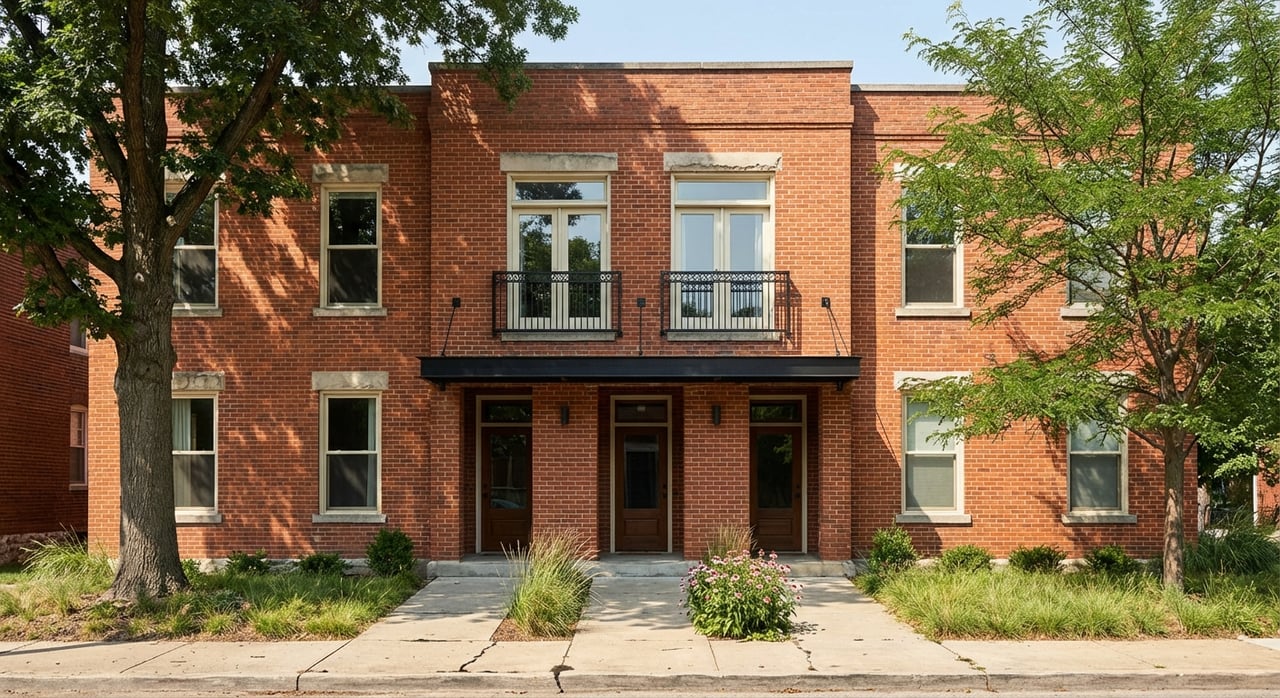
You will most often see duplexes, triplexes, and fourplexes. Some are purpose-built. Others are older homes converted into multiple units. These properties are common entry points for investors who want multiple doors and simpler financing than a large apartment.
Small walk-ups
Small walk-up buildings in the 6 to 15 unit range do exist, though they are less common. If you find one, treat underwriting and lending as commercial-light. Expect more focus on trailing income and expense history.
Tenant profile and leasing tips
Many renters in Garden City work in processing, health care, retail, and education. Household sizes vary, so 2 to 3 bedroom units often see the most interest. You may see higher turnover at entry-level price points, so build that into your vacancy and leasing cost assumptions. Census data is helpful context for renter share and household size. See Garden City’s QuickFacts.
Rents and taxes to model
For conservative underwriting, start with HUD Fair Market Rents. The Finney County 2-bedroom FMR is around 1,030 dollars per month. Use this as a baseline, then compare with live listings and current leases before you write an offer. See the Finney County FMR table.
Property taxes matter to cash flow. Third-party estimates often place Finney County’s effective property-tax rates around the mid 1 percent range. Always verify the current bill and assessed value by parcel with the county. Use the Finney County Property Tax page for lookups and payment details.
Underwriting basics and example
Here are standard definitions you will use in every deal:
- Gross Scheduled Income: total rent at full occupancy.
- Effective Gross Income (EGI): Gross Scheduled Income minus vacancy plus other income.
- Net Operating Income (NOI): EGI minus operating expenses. This excludes mortgage payments and income taxes.
- Cap Rate: NOI divided by purchase price. For a refresher, see this cap rate guide.
Typical expense ranges for small multifamily:
- Property management: 6 to 10 percent of collected rent. Many firms also charge a leasing fee.
- Maintenance and repairs: 5 to 10 percent of gross income. Older buildings trend higher.
- Insurance: get local quotes early and use a conservative placeholder.
- Property taxes: verify with the county for each parcel.
- Capital reserves (CapEx): 3 to 7 percent of gross income.
These ranges reflect common practice. For a practical expense overview, review this investor expense guide.
Two quick scenarios for a Garden City duplex
Assume two 2-bedroom units. Use HUD FMR for a conservative rent test and adjust with real comps before finalizing.
Conservative baseline
- Rent: 1,030 dollars per unit per month
- Gross Scheduled Income: 24,720 dollars per year
- Vacancy and credit loss: 8 percent (about 1,978 dollars)
- EGI: about 22,742 dollars
- Operating expenses: 40 percent of EGI (about 9,097 dollars)
- NOI: about 13,645 dollars
- If the price is about 230,900 dollars, the cap rate is about 5.9 percent.
Market-plus case
- Rent: 1,120 dollars per unit per month
- Gross Scheduled Income: 26,880 dollars per year
- Vacancy and credit loss: 6 percent (about 1,613 dollars)
- EGI: about 25,267 dollars
- Operating expenses: 38 percent of EGI (about 9,602 dollars)
- NOI: about 15,666 dollars
- At a 230,900 dollar price, the cap rate is about 6.8 percent.
These examples illustrate sensitivity. Small changes in rent, vacancy, and expenses can move your returns. Always confirm property taxes for the specific parcel and get insurance quotes before you finalize your numbers.
Financing paths: house-hack vs investor
Owner-occupied 2 to 4 unit purchases can qualify for FHA or conventional programs when you live in one unit. FHA options can allow as little as 3.5 percent down if you meet credit and program rules. Review owner-occupant guidelines in the FHA Single-Family Handbook and confirm details with a local lender.
Investor loans for 2 to 4 units often require higher down payments and reserves. Conventional and portfolio lenders may count a portion of projected rent as qualifying income, subject to program rules. For 5 or more units, financing typically shifts to commercial lending with debt service coverage and other metrics.
Legal rules to know in Kansas
Kansas landlord-tenant law governs deposits, notices, access, repairs, and evictions. Make sure your leases and procedures follow the Kansas Residential Landlord and Tenant Act. A practical overview appears in this Kansas tenant-landlord handbook.
Kansas also preempts local rent control. That means Garden City does not have municipal rent control. Rents are set by the market, your lease terms, and any program rules that apply. Learn more about the state framework in this rent-control explainer.
Always confirm zoning, occupancy limits, parking requirements, and any rental licensing or inspections with the City of Garden City. If a property was converted without approvals, factor compliance costs into your budget.
Due diligence checklist
Use this list to move from interest to offer with confidence:
- Rent survey
- Pull 6 to 12 local comps for your target unit type and neighborhood. Compare to HUD FMR and Census median gross rent.
- Tax and title
- Verify the current tax bill, assessments, and any special fees with the county. Start with the Finney County Property Tax page.
- Physical inspection
- Hire a licensed inspector. Get contractor quotes for roofs, HVAC, plumbing, electrical, and any deferred maintenance.
- Insurance quotes
- Request landlord coverage quotes early. Confirm replacement cost assumptions.
- Lease and rent roll review
- Collect all leases, deposits, payment histories, and service records. Validate month-to-month or term expirations.
- Zoning and code check
- Confirm permitted use, parking, occupancy, and certificates of occupancy with the City.
- Legal review
- Make sure your lease templates and notices align with Kansas law. See the state handbook for reference.
- Financing pre-check
- For house-hacks, ask lenders about FHA or conventional owner-occupied options. For pure investments, review conventional and portfolio products. See the FHA guide.
Manage risk and stress test
Employer concentration can be both a strength and a risk. If a major plant reduces shifts, you could see slower leasing or higher vacancy for a period. Read the local coverage on meatpacking’s role and build a plan.
Simple stress tests to run before you buy:
- Raise vacancy to 9 or 10 percent and re-check cash flow.
- Add 10 to 15 percent to maintenance and CapEx for older assets.
- Model a 5 to 10 percent rent drop and confirm you can cover debt service.
Work with a local, data-led partner
The right partner helps you find off-market leads, verify rents, underwrite taxes and insurance, and choose the right financing path. Our team pairs commercial-grade analysis with hands-on residential expertise, so you get clear comps, investor-level pro formas, and steady guidance from offer to closing. If you are ready to evaluate a duplex, triplex, or fourplex in Garden City, connect with RE/MAX ONE for a focused strategy and property-level research.
FAQs
What are typical 2-bedroom rents in Garden City, KS?
- HUD Fair Market Rent for a 2-bedroom in Finney County is around 1,030 dollars per month, which is a solid conservative baseline to test against live comps. See the FMR table.
How do Finney County property taxes affect cash flow on a duplex?
- Effective tax rates often land in the mid 1 percent range, but your exact bill depends on assessed value and the mill levy. Verify the parcel’s current bill on the Finney County Property Tax page before finalizing your pro forma.
Can I use FHA to buy a duplex in Kansas if I live in one unit?
- Yes. FHA can finance 2 to 4 unit properties for owner-occupants, often with as little as 3.5 percent down if you meet program rules. Review the FHA Single-Family Handbook and confirm details with a local lender.
Is there rent control in Garden City, KS?
- No. Kansas preempts local rent control, so rents are set by the market and your lease terms, subject to any program rules. See this Kansas rent-control summary.
What expense ratios are reasonable for small multifamily in Garden City?
- Many investors model a total operating expense load near 35 to 45 percent of EGI for older assets, including management, repairs, insurance, taxes, and reserves. See this expense overview to refine your line items.