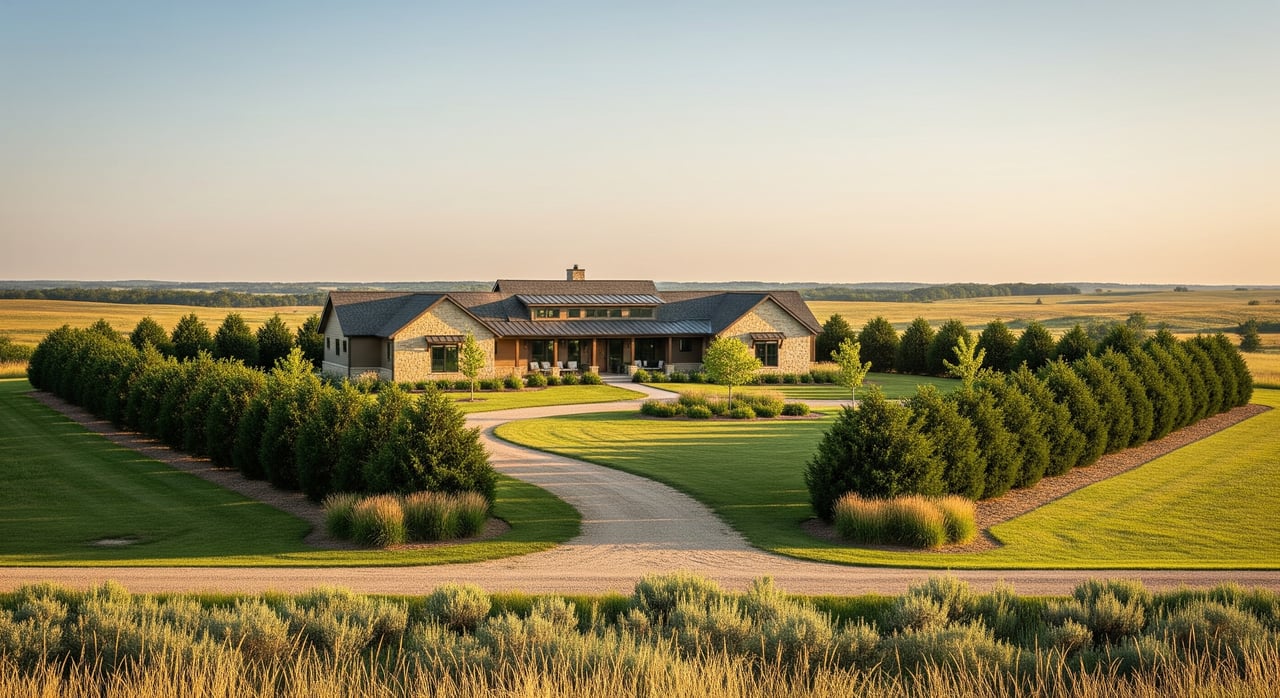
Winter winds and drifting snow can turn an open 3–5 acre lot into a tough place to live and work. If you are in Sagebrush Estates near Everest, you probably feel the gusts on your porch and the drifts across your driveway. The good news is a well‑planned windbreak can cut wind speeds, trap snow where you want it, and create a more comfortable, efficient property. This guide shows you how to design, plant, and maintain a windbreak that fits a 3–5 acre lot in northeastern Kansas. Let’s dive in.
Why windbreaks matter in Everest, KS
A good windbreak does more than block wind. On small acreages in Brown County, it can:
- Reduce winter wind around your home, patio, and livestock areas for comfort and energy savings.
- Trap drifting snow before it reaches your driveway or private road.
- Limit dust blowing off exposed soils or gravel drives.
- Create sheltered microclimates for gardens and orchards and reduce evaporation.
- Offer privacy, habitat for birds and pollinators, and attractive screening.
Northeastern Kansas typically sees prevailing winter winds from the northwest to north. Brown County generally spans USDA zones 5b to 6a. Confirm your exact zone, seasonal wind patterns, and soil conditions before you finalize a plan.
Site-first planning
Start with your goals. Decide if your top priority is protecting the house and yard, keeping the driveway clear, reducing dust, or building privacy.
Next, ground-truth your site. Check wind directions across seasons and note drift patterns after snow events. Consider a basic soil test so your species choices match your soil texture and drainage. If your road is salted, plan for some salt tolerance in the first row.
Finally, map what you need to access. Note driveways, utilities, easements, overhead lines, and any sightline needs near roads.
Placement and orientation
Place windbreaks perpendicular to the dominant winter winds. In this area, that often means roughly west-northwest to north of what you want to protect.
- Distance from buildings: A good rule of thumb is 1 to 5 times the windbreak’s expected mature height. The strongest wind reduction happens 2 to 5 heights downwind, with benefits extending to about 10 heights.
- Snow control: A living snow fence should sit upwind of the driveway or road at a setback that lets snow pile in front of the barrier rather than on the surface. Depending on species and porosity, that can range from a few dozen to a few hundred feet.
Protecting your home and yard
For a home and patio, a multi-row shelterbelt placed 1 to 3 heights upwind usually delivers quick comfort and energy savings without shading the house too much. Keep enough room between rows for long-term maintenance.
Keeping your driveway clear
A low, dense shrub row or two upwind of the drive can capture drifting snow before it hits the gravel. Ensure you have space for the drift to accumulate safely away from the driving surface.
Rows, spacing, and density
On a 3–5 acre lot, a three to five row windbreak usually offers the best balance of performance and footprint.
- Row count: 3 to 5 rows is common on small acreages. More rows create a denser barrier but need more width.
- Row spacing: 8 to 12 feet between tree rows. Shrub rows can be 6 to 10 feet from the nearest row.
- Within-row spacing: Fast-growing trees at 8 to 12 feet for a quick screen. Larger, long-lived trees at 12 to 20 feet. Shrubs at 3 to 6 feet for a continuous hedge.
- Overall width: A 3-row windbreak might span 25 to 50 feet. A 5-row design can reach 40 to 80 feet.
- Porosity: Aim for moderate porosity, about 30 to 50 percent. A wall-like evergreen screen can cause turbulence and drop snow in the wrong place.
Suggested spacing on 3–5 acres
- 1st row (windward) shrubs: 3 to 6 feet apart.
- 2nd row evergreens: 8 to 12 feet apart.
- 3rd row fast-growing trees: 10 to 15 feet apart.
- Optional 4th and 5th rows: 12 to 20 feet apart for long-lived species.
Species that work in northeast Kansas
Choose species that match your USDA zone, soil, and exposure. Use a blend of evergreens, deciduous trees, and shrubs for resilience and year-round performance.
- Evergreens: Eastern red cedar is a reliable, dense wind and snow protector and very drought tolerant. Norway spruce also provides strong year-round cover. Some spruce species can struggle in hot, humid summers, so prioritize hardier options. Place eastern red cedar thoughtfully to avoid spreading into pastures, and be aware it can host cedar-apple rust.
- Deciduous trees: Hackberry handles poor soils and adds wildlife value. Thornless honeylocust grows fast and offers filtered shade, but it is more open, so combine it with denser rows. Oaks like bur oak, swamp white oak, and chinkapin oak build long-term structure and habitat but establish more slowly.
- Shrubs for snow capture: American plum, chokecherry, Osage orange, and native viburnums form low, dense rows that trap drifting snow and benefit wildlife.
Use ash species cautiously due to Emerald Ash Borer risk. Avoid planting tall trees under powerlines.
Layering for year-round protection
A practical sequence from windward to leeward looks like this:
- Dense shrub row to catch snow and reduce dust.
- Evergreen row for year-round wind protection and screening.
- Fast-growing tree row to build height quickly.
- Optional outer rows of long-lived hardwoods for lasting structure.
Example layouts for Sagebrush Estates
- Single directional shelter: Plant a 3 to 4 row belt upwind of the home and yard. This is a strong all-around choice on 3–5 acre lots.
- Driveway snow trap: Add 1 to 2 dense shrub rows upwind of the drive at a setback that captures drifts before the road.
- Perimeter shelter: Stagger plantings along the windward property line with planned access gaps. This reduces dust while keeping views.
- Combination approach: Use a multi-row shelter near the house and a separate, low shrub snow fence farther upwind to manage drifting snow.
Planting and establishment timeline
Bareroot seedlings are typically planted in early spring before budbreak. Containerized stock offers more flexibility, but costs more. Plant at the correct depth, spread roots, and water in well. Avoid planting too deep or leaving air pockets.
Windbreaks begin to show measurable shelter in 3 to 7 years with fast-growing species. Full screening and snow control improve as the planting matures.
Year 1 to 3 essentials
- Keep a 2 to 3 foot weed-free mulch ring around each plant.
- Water during dry spells, especially in the first 1 to 3 growing seasons.
- Protect from deer and livestock with tubes, cages, or fencing.
- Staking is rarely needed unless larger container trees rock in the wind.
Years 5 to 20 care
- Prune to build strong structure. Do not top trees.
- Thin crowded inner rows if needed to favor your long-term species.
- Monitor for pests and diseases. Watch for cedar-apple rust interactions and any spruce stress.
- Manage grasses and debris near dense evergreen rows to reduce fire risk, especially with eastern red cedar.
Costs and simple estimating
Create a quick estimate using your planned length and spacing:
- Measure the windbreak length and select 3 to 5 rows and your within-row spacing.
- Calculate plants per 100 feet: divide 100 by your spacing. Multiply by the number of rows and by total length.
- Add 10 to 20 percent for replacements and early mortality. Multiply by per-seedling cost and any materials like mulch, tubes, and fencing. Include labor if you plan to hire help.
Seedling prices and species availability change yearly. Plan ahead and order early.
Programs and local help
- Kansas Forest Service seedling program: Offers low-cost bareroot seedlings and shrubs for conservation plantings, with ordering in late winter and spring delivery. Check the current species list, sizes, and deadlines.
- USDA NRCS: The local service center can provide technical design guidance and may offer cost-share through programs such as EQIP for windbreak establishment under practice standard 380.
- K-State Research and Extension, Brown County: Get soil tests, species advice, and site-specific design help.
- Utility and permitting checks: Call 811 before digging to locate underground utilities. Review overhead powerlines and follow your subdivision covenants or county rules for setbacks and sightlines.
Quick start checklist
- Confirm your USDA zone and map wind patterns on your lot.
- Mark utilities, powerlines, and any easements.
- Choose a 3 to 5 row layout with 25 to 80 feet of width based on space.
- Select a mixed species palette: shrubs, evergreens, and long-lived hardwoods.
- Set spacing: shrubs 3 to 6 feet, evergreens 8 to 12 feet, larger trees 12 to 20 feet.
- Order seedlings in late winter for spring planting.
- Prep mulch, watering plan, and browse protection for years 1 to 3.
- Plan for pruning, thinning, and fuel management as the planting matures.
A thoughtful windbreak can transform your Sagebrush Estates acreage. You get calmer winters, fewer drifts on the driveway, and healthier gardens. If you are preparing to buy or sell acreage, a planned shelterbelt can also boost day-to-day livability and curb appeal. Ready to discuss how land features like windbreaks fit your property goals? Connect with Unknown Company to talk strategy or to Get Your Free Home Valuation.
FAQs
How wide should a windbreak be for a 3–5 acre lot in Sagebrush Estates?
- A 3 to 5 row design that is 25 to 80 feet wide is typical and effective, depending on species, spacing, and your goals.
How far from my house should I plant the windbreak?
- Position it about 1 to 5 times the expected mature height upwind of the home to balance wind protection and shade.
When should I plant seedlings from the Kansas Forest Service program?
- Most bareroot seedlings are planted in early spring before budbreak. Order in late winter and confirm pickup or delivery timing.
Which trees should I avoid in a northeast Kansas windbreak?
- Avoid heavy reliance on ash due to Emerald Ash Borer. Also avoid planting tall species directly under powerlines.
How long will it take before my windbreak works?
- You can see measurable reductions in wind in 3 to 7 years with faster species. Full screening and long-term structure take longer.
Do I need to check utilities or permits before planting a windbreak?
- Yes. Call 811 to locate underground utilities, review overhead lines, and check subdivision covenants or county codes for setbacks and sightlines.